
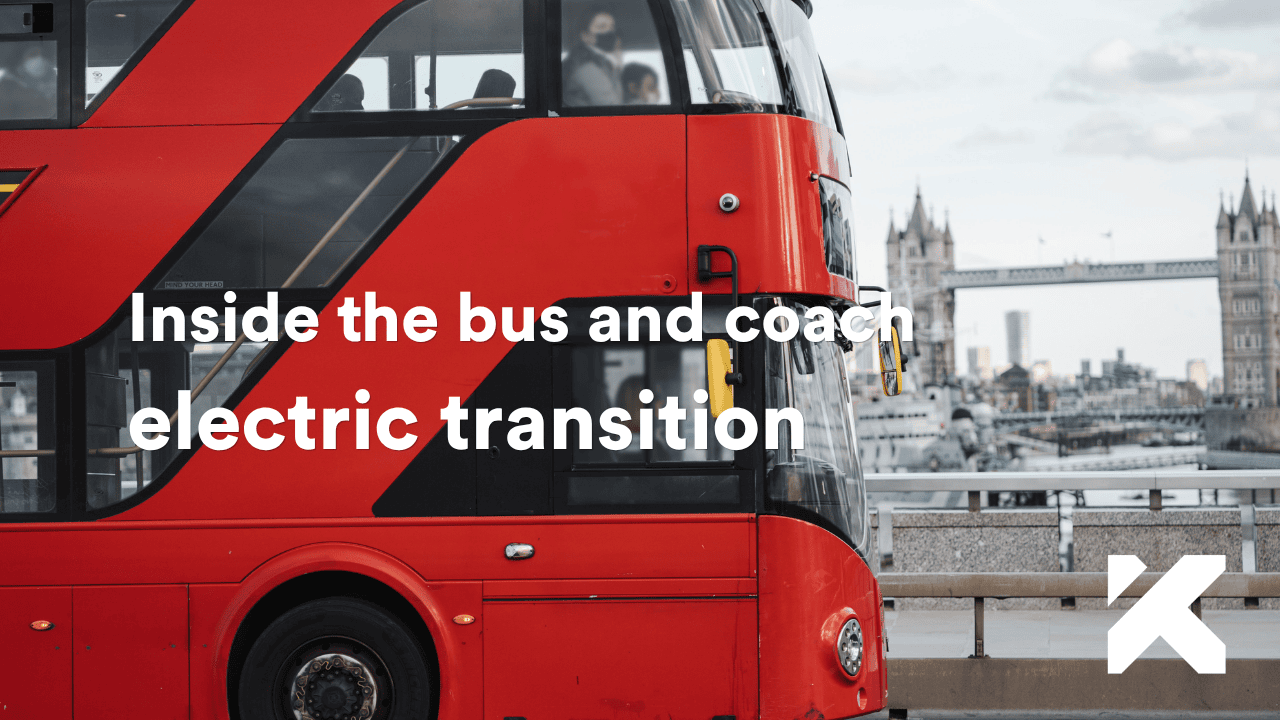
The UK bus and coach sector is continuing to move steadily towards electrification, with rising zero-emission registrations, growing government investment, and continued fleet renewal all pointing towards a significant period of change for the industry and accelerating the wider trend towards bus and coach electrification.
Recent figures from the Society of Motor Manufacturers and Traders show that while the overall market has experienced some fluctuations in recent quarters, the long-term direction of travel remains increasingly clear. Zero-emission vehicle adoption continues to grow rapidly, with electric buses now taking a record share of the market.
In Q1 2026, nearly two in five new buses registered in the UK were zero-emission vehicles, representing a record market share of 37.3%. While overall registrations fell compared to the exceptionally strong performance seen in 2025, the continued growth of zero-emission uptake highlights how quickly the sector is transitioning towards lower-emission fleets.
That momentum is also being supported by further public investment. In March of this year, the UK government announced £73.2 million in funding to support the rollout of 484 new zero-emission buses across England, alongside associated depot and infrastructure upgrades. Local operators and authorities are expected to contribute a further £94 million, taking total investment linked to the programme to more than £167 million.
Taken together, these developments suggest that electrification is no longer simply a future ambition for the sector. For many operators, it is already becoming an operational reality.
Diesel fleets still remain operationally critical
However, while the vision for zero emissions is clear, the transition itself remains far from straightforward.
Much of the bus and coach industry still relies heavily on diesel fleets today, particularly within coach operations and longer-distance services where infrastructure, range requirements, and operating patterns can make electrification more difficult to implement quickly.
At the same time, operators continue to face pressure linked to fuel volatility. Concerns have increasingly shifted beyond price alone, with supply reliability also becoming a growing consideration for some businesses, given the recent conflict in the Middle East. For operators managing tight schedules and public service expectations, uncertainty around fuel availability creates additional operational risk when it comes to planning services, maintaining uptime, and managing costs.
This effectively leaves many businesses managing two realities at once.
On one side, there is increasing pressure to invest in zero-emission technology and prepare fleets for the future. On the other hand, there remains an immediate operational need to maintain existing diesel vehicles that continue to form the backbone of many services across the country.
Policy ambition versus operational reality
The wider commercial vehicle market has already seen similar tensions emerge, particularly within the HGV sector. Policymakers, manufacturers, and operators may all agree on the long-term direction towards decarbonisation, but the practical challenge lies in how those ambitions translate into day-to-day operations.
For many operators, the transition involves far more than simply replacing vehicles.
Depot infrastructure upgrades, charging capability, energy supply, route planning, maintenance procedures, workshop layouts, and vehicle downtime management all become critical parts of the conversation. The shift towards electric fleets requires significant long-term planning, particularly for larger operators managing mixed fleets across multiple depots.
In many cases, infrastructure readiness may ultimately dictate the pace of transition as much as vehicle availability itself.
Bus and coach electrification is driving new skills demands
The pace of technological change is also creating new workforce challenges across the sector.
Engineering teams are increasingly being asked to adapt to new systems, diagnostics, and maintenance requirements associated with electric vehicles, while still supporting existing diesel fleets that remain operationally essential. Demand for technicians with high-voltage and EV maintenance knowledge is expected to continue growing as more electric vehicles enter service.
These are trends that are increasingly being reflected in conversations we are having with both clients and candidates across the commercial vehicle sector.
“I’ve definitely found the discussion becoming more common from my side. Technicians who are multi-skilled, particularly those with both mechanical and electrical experience, are becoming much more sought after.
Candidates with Level 3 or Level 4 Electric and Hybrid Vehicle qualifications are often much easier sell-ins with clients, and it’s becoming increasingly difficult to spec a candidate that doesn’t have some form of exposure to electric PSVs.
Especially within London, more garages are looking for technicians who have worked across both diesel and electric fleets, particularly on Cummins, BYD, and Volvo platforms.”
Beth Hills
Senior Business Manager
This reflects the wider reality currently facing many operators. While electric fleets continue to grow, diesel vehicles still remain operationally critical, creating demand for engineers who can work confidently across both technologies during the transition period.
At the same time, traditional diesel expertise remains just as important in the short to medium term. This creates a balancing act for operators when it comes to recruitment, training, and workforce planning.
The industry is therefore entering a transition period where adaptability and broader technical skillsets are likely to become increasingly valuable across engineering teams over the coming years.
The industry’s focus is shifting towards long-term delivery
Despite these challenges, the broader momentum behind electrification continues to build.
According to SMMT data, the UK bus and coach market delivered its strongest annual performance in 17 years during 2025, with zero-emission registrations rising by more than 62% year-on-year to account for over a quarter of all new vehicles entering service. The UK is also now regarded as Europe’s largest zero-emission bus market.
That level of growth demonstrates the scale of investment and commitment already taking place across the sector.
However, as the industry continues moving towards a lower-emission future, the long-term success of the transition is likely to depend not only on policy targets and vehicle registrations, but on how effectively operators can adapt infrastructure, maintenance operations, and workforce capability to support it.
“The direction of travel is clear, but for many operators the biggest challenge now is managing the transition in a practical way while still keeping day-to-day operations moving.”
Tyler James
Senior Business Manager
As specialists within the bus and coach sector, Kemp Recruitment continues to see first-hand how workforce requirements are evolving as operators adapt to new technologies and mixed fleet environments.
For many across the bus and coach industry, the conversation is no longer about whether electrification is coming. The focus is increasingly shifting towards how the transition can be delivered sustainably, practically, and without compromising operational reliability along the way.
References
SMMT Q1 bus and coach registrations report
SMMT Bus and Coach Registrations Data
Route One – Government funding for 484 electric buses
Route One – ZE market share hits record high
SMMT – Strongest market since 2008
ElectricDrives – UK remains Europe’s biggest zero-emission bus market


