
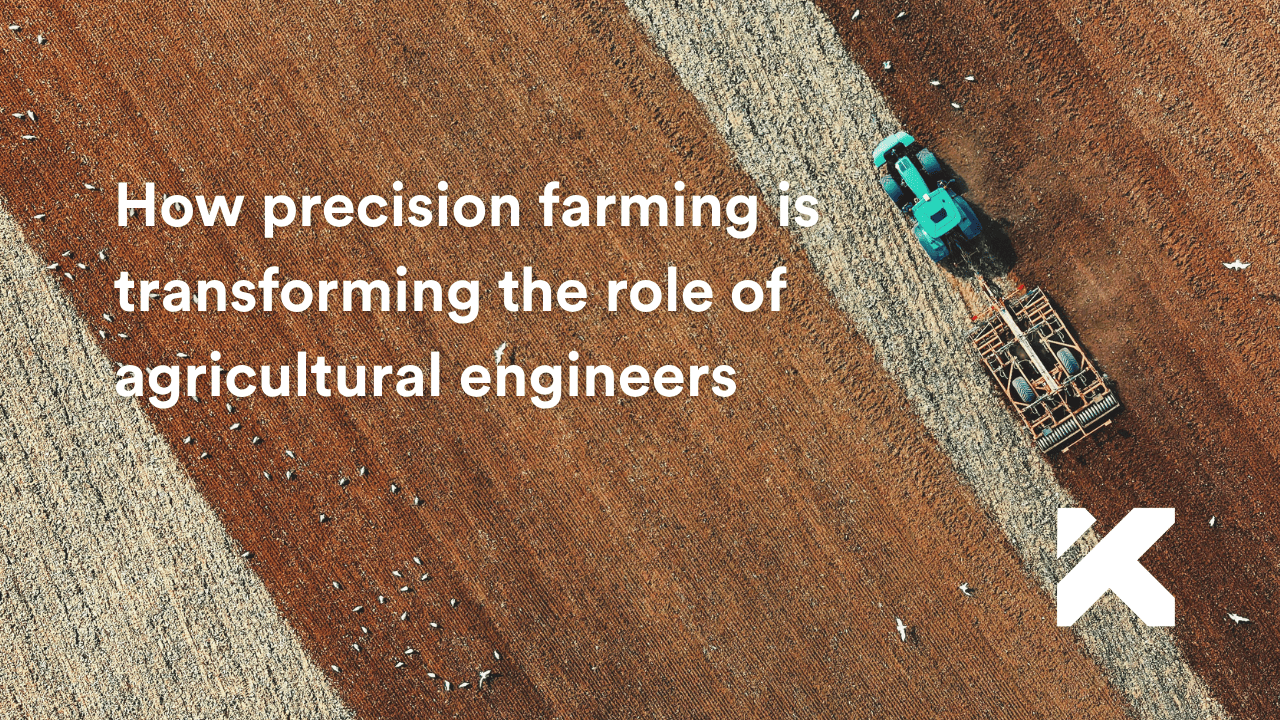
The future of farming has been brought into the spotlight again recently, with the latest series of Clarkson’s Farm exploring how precision farming and agricultural technology are shaping modern agriculture. While the programme has introduced these innovations to a wider audience, the transformation of farming has been underway for many years. The Agriculture and Horticulture Development Board (AHDB) continues to support farmers through research, technical guidance and industry events focused on precision farming, helping businesses adopt technologies such as satellite guidance, remote sensing, precision soil management and digital decision-making to improve productivity and build resilience. As farms become increasingly reliant on advanced technology, the role of Agricultural Engineers is evolving too. From GPS-guided tractors and precision spraying to telematics, remote diagnostics and automated machinery, today’s Agricultural Engineers are responsible for maintaining the sophisticated equipment that keeps modern farming moving.
As farming evolves, so too does the role of the Agricultural Engineer
No longer focused solely on repairing machinery, today’s engineers are expected to diagnose complex electronic faults, work with sophisticated software and support equipment that is becoming more connected than ever before.
Precision farming is changing the way farms operate
Precision farming uses technology and data to help farmers make better-informed decisions throughout the farming cycle.
Modern agricultural machinery now commonly incorporates technologies such as:
- GPS guidance systems
- Automated steering
- Variable rate application
- Precision spraying
- Telematics
- Remote diagnostics
- Digital performance monitoring
The aim is simple: to improve productivity while reducing waste, fuel use and input costs. Research published by the UK Parliament’s Parliamentary Office of Science and Technology found that GPS guidance systems can reduce overlaps during field operations by between 6% and 10%, helping farmers save time, fuel, seed and fertiliser. Automatic section control can also reduce spray use by around 9%, improving both efficiency and sustainability. As environmental pressures increase and farm businesses look to maximise productivity, it’s easy to see why precision farming has become such an important area of investment.
Innovation is accelerating across the industry
The technology featured on Clarkson’s Farm may have surprised many viewers, but innovation within agriculture has been progressing at an impressive pace for years. One of the UK’s most ambitious agricultural research projects, Hands Free Hectare, demonstrated back in 2017 what could be possible. Researchers at Harper Adams University successfully became the first in the world to sow, grow and harvest a cereal crop using autonomous machinery, drones and GPS-guided technology without anyone driving the machines in the field. Rather than relying on futuristic prototypes, the project adapted commercially available machinery, demonstrating that many of these technologies are already available today. While fully autonomous farming is still developing commercially, projects like Hands Free Hectare highlight the direction of travel for the agricultural industry and the increasing role technology will play in the years ahead.
Why employers are changing who they recruit
As agricultural machinery becomes increasingly sophisticated, the skills required to maintain it are changing too.
According to Amy Parsons, Client Manager at Kemp Recruitment:
“Agricultural Engineers today need a much broader skill set than they did even a few years ago. Employers are looking for people who are just as comfortable using diagnostic software and working with precision farming technology as they are repairing mechanical faults. The role is becoming increasingly technical, and that’s changing the type of engineers businesses want to recruit.”
Mechanical expertise remains fundamental, but employers are increasingly looking for engineers who also understand electronics, diagnostics, software and the digital systems that underpin modern agricultural machinery. It’s no longer just about fixing a machine when it breaks down. Today’s agricultural engineers are expected to diagnose complex faults, install software updates, calibrate GPS systems and help customers get the very best from increasingly advanced equipment.
The agricultural engineer of today
The role has evolved significantly over the last decade. A modern Agricultural Engineer may spend one day servicing a combine harvester and the next diagnosing an electronic fault using manufacturer software or calibrating precision farming equipment.
Typical responsibilities now include:
- Mechanical repairs and servicing
- Hydraulic and transmission repairs
- Electronic diagnostics
- GPS calibration
- Software updates
- Telematics and remote diagnostics
- Preventative maintenance
As manufacturers continue to introduce new technologies, continuous professional development and manufacturer training have become more important than ever.
Building the workforce of the future
As technology continues to reshape agriculture, demand for skilled Agricultural Engineers is expected to grow. At the same time, many employers face increasing competition for experienced engineers with the right combination of technical expertise and agricultural knowledge. The industry is responding by investing in apprenticeships, encouraging more young people into land-based engineering and developing the skills needed to support the next generation of agricultural technology. For employers investing in increasingly sophisticated machinery, having engineers with the right knowledge and experience is becoming just as important as the equipment itself.
Looking ahead
Agriculture has always embraced innovation, but today’s pace of technological change is unlike anything the industry has experienced before. Precision farming, automation, connected machinery and artificial intelligence are no longer concepts for the future. They are becoming part of everyday farming, helping businesses improve productivity, efficiency and sustainability. Behind every one of these innovations is a skilled engineer responsible for keeping the technology running when it matters most. As farming continues to evolve, so too will the role of the Agricultural Engineer. Those who combine traditional engineering expertise with the ability to work confidently on increasingly sophisticated machinery will be well placed to support the future of UK agriculture.
Whether you’re an agricultural business looking to strengthen your engineering team or an Agricultural Engineer considering your next career opportunity, Kemp Recruitment works with businesses and skilled professionals across the UK to connect the right people with the right opportunities. View our latest agricultural vacancies, or call 0330 440 2323 if you’re looking to recruit top agricultural talent.
Continue reading
Future of UK Farming
This article forms part of Kemp Recruitment’s Future of UK Farming series, exploring the trends, technology and workforce shaping the future of UK agriculture.
Published articles
Article 1 | Extreme Weather and UK Farming
Changing weather patterns are placing increasing pressure on UK agriculture. Discover how the industry is adapting through innovation, resilience and the growing demand for skilled Agricultural Engineers.
Read the article → Extreme weather and UK farming challenges
Coming soon
Article 3 | How smart farming is changing agricultural engineering. Discover how AI, robotics, automation and connected machinery are changing the day-to-day role of Agricultural Engineers.
Article 4 | The agricultural skills challenge. Why attracting and retaining Agricultural Engineers is becoming one of the biggest workforce challenges facing UK agriculture.
Article 5 | The future of agricultural machinery. From autonomous tractors to connected fleets, explore how machinery is evolving and what it means for employers and engineers alike.
References
This article draws upon research and information published by the following organisations:
- Agriculture and Horticulture Development Board (AHDB) – Precision Farming
https://ahdb.org.uk/topic/research-and-innovation/precision-farming - UK Parliament – Parliamentary Office of Science and Technology (POST) – Precision Agriculture (POSTnote 505)
https://researchbriefings.files.parliament.uk/documents/POST-PN-0505/POST-PN-0505.pdf - Harper Adams University – Hands Free Hectare Project
https://www.harper-adams.ac.uk/research/project/196/hands-free-hectare - UK Research and Innovation (UKRI) – Hands-Free Crop Harvested by Robots in World First Trial
https://www.ukri.org/who-we-are/how-we-are-doing/research-outcomes-and-impact/innovate-uk/hands-free-crop-harvested-by-robots-in-world-first-trial/


